
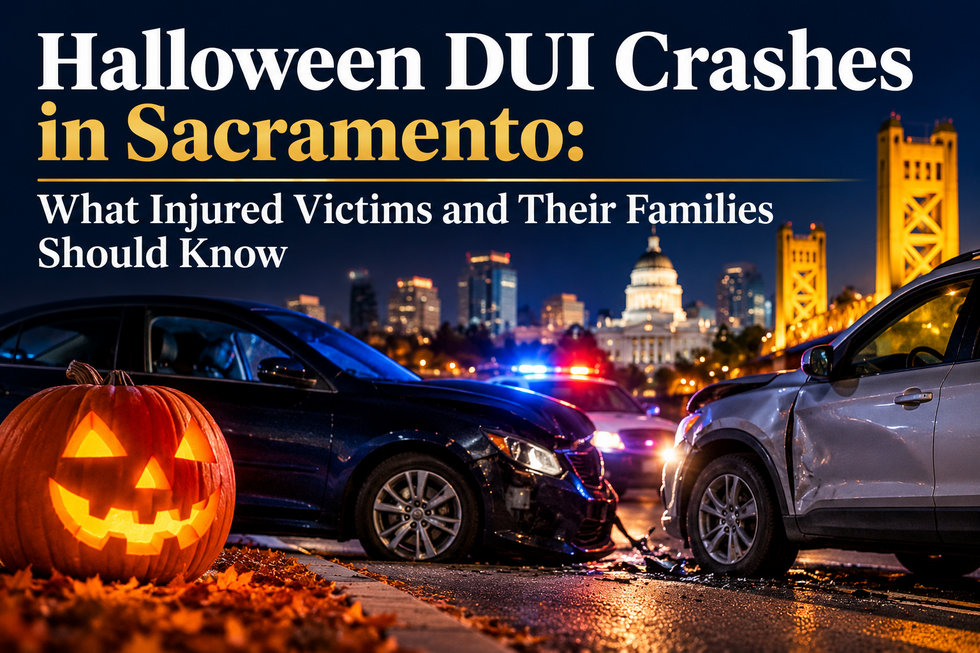
Halloween can bring crowded streets, late-night celebrations, parties, and more traffic around Sacramento. When a driver is suspected of driving under the influence and a collision leaves someone injured, the consequences can extend far beyond the crash itself. Victims and their families may be dealing with emergency treatment, missed work, vehicle damage, insurance calls, and uncertainty about what happens next.
If you or a family member has been hurt in a suspected Halloween DUI accident in Sacramento, your first priority is safety and medical care. After that, it is important to preserve information about the collision and understand that the criminal investigation and any claim for financial compensation are separate legal matters.
I am John Campanella of the Law Office of John Campanella. My practice focuses on DUI defense and California driving-related legal issues. From that perspective, I know why it is important to distinguish an allegation of impaired driving from what has actually been established through an investigation or court proceeding. For an injured person, that distinction matters—but so do the practical steps needed to document injuries, protect evidence, and understand potential legal options.
This guide explains what Sacramento-area victims and families should consider after a suspected alcohol-related collision, including reporting requirements, insurance issues, possible compensation, and when to seek advice from an attorney whose practice covers personal injury claims.
What Should You Do Immediately After a Suspected Halloween DUI Crash?
The minutes following a collision can be confusing. You may not know how seriously someone is injured or whether the other driver was impaired. You do not need to determine the cause of the crash yourself before getting help.
1. Get to safety and call 911 if anyone may be injured
If someone is hurt, call 911 and request emergency assistance. Follow the dispatcher's instructions. Do not move an injured person unless necessary to avoid an immediate danger, because movement can worsen certain injuries.
If you can do so safely, move away from traffic and other hazards. Do not put yourself at risk to photograph the scene or collect information. Medical care and immediate safety take priority over evidence gathering.
2. Seek medical attention, even if injuries are not immediately obvious
Not every injury produces severe pain at the scene. Some symptoms may become noticeable later, and adrenaline can make it difficult to assess how you feel immediately after a collision.
Follow medical advice and keep records of examinations, treatment, prescriptions, referrals, and follow-up appointments. If symptoms change, report them to your healthcare provider. These records are important for your health and may also help document the effects of the collision.
Do not delay necessary treatment because you are worried about insurance coverage or who will pay. Ask the medical provider and your insurer about available coverage and billing options.
3. Report the collision to law enforcement
If you suspect that another driver was impaired, tell the responding officer what you observed rather than trying to diagnose the driver's condition yourself. Relevant observations might include the vehicle's movement before the collision, statements made at the scene, or conduct you personally witnessed.
Law enforcement may investigate whether alcohol or drugs contributed to the crash. Officers may interview drivers and witnesses, document the scene, and gather other evidence. An investigation can take time, and an initial suspicion is not the same as a final finding of criminal responsibility.
4. Exchange information if it is safe to do so
When circumstances permit, obtain the other driver's name and contact details, driver's license information, vehicle registration, license plate number, and insurance information. Also note the names and contact details of witnesses.
If you are too injured to do this yourself, a family member or another appropriate person may be able to help. Do not argue about fault or make assumptions about what the investigation will establish.
The California Highway Patrol provides general guidance on what to do after a traffic collision.
How to Report a Sacramento DUI Accident and Preserve Evidence
Once immediate safety and medical needs have been addressed, preserving reliable information can make a difference. A collision may be investigated by law enforcement while insurance companies separately evaluate liability and damages.
Keep the police report information
Ask how to obtain the incident or collision report and keep any report number provided by the responding agency. Depending on where the collision occurred, the investigating agency may be the Sacramento Police Department, the California Highway Patrol, or another local law enforcement agency.
A police report can contain useful information about the reported collision, people involved, witnesses, and the officer's observations. However, a report is not necessarily a final decision about fault, and some information may require further investigation.
Take photographs and preserve video when possible
If you or someone helping you can safely document the scene, useful evidence may include:
- Photographs of vehicle damage and the vehicles' positions, if available.
- Road conditions, traffic signals, signs, lighting, and relevant roadway features.
- Visible injuries, provided photographs do not interfere with medical care.
- Names and contact information for witnesses.
- Dashcam footage or other recordings of the collision.
- Receipts, trip details, or other records that help establish the timeline.
Nearby businesses or residences may have cameras that recorded part of the incident. If you believe footage exists, make a note of the location and approximate time and tell your attorney promptly. Some systems overwrite recordings after a limited period.
Do not trespass, access someone else's account, or attempt to obtain evidence unlawfully. A lawyer can advise on appropriate ways to request or preserve relevant material.
Keep a record of your injuries and financial losses
Create a file for medical bills, treatment summaries, pharmacy receipts, insurance correspondence, repair estimates, towing charges, and wage-loss information. Keep copies of receipts for reasonable out-of-pocket expenses related to the collision.
You may also find it helpful to keep a simple record of pain, mobility limitations, sleep disruption, missed activities, or other effects on daily life. Keep these notes factual and consistent with your actual experience.
California Collision Reporting Requirements You Should Know
There can be more than one reporting obligation after a California traffic collision. A report to law enforcement does not necessarily satisfy every reporting requirement.
Under California DMV guidance, a driver generally must submit a Report of Traffic Accident Occurring in California, known as an SR-1, within 10 days when a collision results in an injury or death, or property damage exceeding $1,000. This requirement applies regardless of who caused the collision. The SR-1 is separate from any report made to the police or CHP.
California law also addresses reporting injury or fatal collisions to law enforcement. California Vehicle Code section 20008 generally requires a driver involved in an injury or fatal collision to make or arrange a written report to the appropriate law enforcement agency within 24 hours, subject to the statute's terms and applicable circumstances.
These requirements concern the people legally responsible for making the reports. If you were a passenger or injured pedestrian, your obligations may differ from those of a driver involved in the collision. Do not assume someone else has completed a required report on your behalf.
Review the official California DMV SR-1 accident-reporting instructions and seek advice if you are uncertain whether a report is required in your circumstances.
A Criminal DUI Investigation Is Not the Same as a Civil Injury Claim
This is one of the most important distinctions for an injured person or family to understand.
If investigators suspect that a driver was impaired, the government may investigate whether the driver violated California criminal law. Separately, an injured person may have a civil claim seeking compensation for harm caused by another person's negligence or other legally actionable conduct.
The two processes serve different purposes, follow different procedures, and may have different outcomes.
| Issue | Criminal DUI case | Civil injury claim |
|---|---|---|
|
Who brings it? |
The government prosecutes the criminal charge. |
The injured person, or an authorized representative in an appropriate case, pursues a claim. |
|
Main purpose |
Determine whether a crime was committed and whether criminal penalties apply. |
Determine civil responsibility and, if established, compensation for legally recognized losses. |
|
Evidence |
May include police observations, chemical tests, witness accounts, and other evidence relevant to the charge. |
May include collision evidence, medical records, witness statements, financial records, and other proof of liability and damages. |
|
Possible outcome |
A dismissal, plea resolution, trial verdict, or criminal sentence if there is a conviction. |
A settlement or civil judgment, depending on liability, damages, insurance, and the applicable law. |
A DUI arrest does not automatically establish civil liability. Likewise, an injured person does not necessarily have to wait for a criminal conviction before exploring a civil claim. The effect of the criminal investigation on a particular civil case depends on the facts, available evidence, and applicable law.
If a criminal case is pending, victims and families should avoid assuming that every piece of information will be immediately available. They should preserve their own records and get advice about the appropriate timing and procedure for pursuing a civil claim.
What Compensation May Be Available After a DUI-Related Crash?
If another person's legally actionable conduct caused your injuries, a civil claim may allow you to seek compensation for certain losses. The types of damages available depend on the circumstances, the evidence, applicable law, and the coverage available.
Potential categories of loss can include:
- Medical expenses: Reasonable costs of emergency care, hospitalization, treatment, medication, rehabilitation, and other related medical services.
- Lost income: Wages or other earnings lost because the injuries prevented you from working.
- Future financial losses: Certain future medical expenses or reduced earning capacity when supported by the evidence.
- Pain and suffering: Legally recoverable non-economic harm associated with the injuries.
- Property damage: Vehicle repairs, replacement value when appropriate, and certain related expenses.
- Other documented losses: Additional expenses or harm that may be recoverable under the circumstances.
These are possible categories, not a promise that every injured person can recover each type of loss. A claim must be supported by evidence, and the amount of any recovery depends on the facts and applicable legal rules.
The California Courts' guide to personal injury cases explains common types of damages and the importance of evidence in civil claims.
How Insurance Can Affect an Injury Claim
Insurance is often a central part of a vehicle-collision claim. Even when the available evidence suggests that another driver caused the crash, questions may remain about the available policies, coverage limits, disputed liability, and the extent of the injuries.
The other driver's liability insurance
If the other driver is found legally responsible, their applicable liability coverage may be a source of compensation. The available amount depends on the policy, the number of claims, coverage terms, and other circumstances.
An insurer may investigate the collision, request records, evaluate medical expenses, and assess whether the claimed losses are supported. An insurance company's initial position is not necessarily the final resolution of a disputed claim.
Your own insurance coverage
Your own policy may provide benefits that are relevant after a collision. Depending on your coverage, these could include medical payments coverage, collision coverage for vehicle damage, or uninsured or underinsured motorist coverage.
These coverages have different purposes, conditions, and limits. Review your policy and notify your insurer as required by the policy terms. Ask the insurer to explain the available coverages and any documentation it needs.
What if the suspected impaired driver has no insurance?
If the other driver is uninsured, or the available liability coverage is insufficient to cover the losses, the options may be more complicated. Depending on the policy and circumstances, uninsured or underinsured motorist coverage may be relevant. Other potential sources of recovery should be assessed based on the evidence and law.
Do not assume that the other driver being uninsured automatically means you cannot recover anything. Equally, do not assume that your own insurer will cover every loss. Policy wording and the facts matter.
The California Department of Insurance provides consumer information about what to do after an accident and how auto claims work.
Be Careful Before Accepting a Settlement
After a serious collision, an insurance company may ask for information or make a settlement offer. Before accepting an offer or signing a release, consider whether you understand the full scope of your injuries and the terms of the proposed resolution.
Some injuries require continued treatment, and the financial effect of an injury may not be clear immediately. A settlement can affect your ability to seek additional compensation for losses covered by the release.
You should also be cautious about giving recorded statements or signing broad authorizations without understanding what you are agreeing to. You can ask the insurer to explain its request and consult an attorney if you are uncertain about your rights.
This does not mean every insurer request is improper or that every settlement offer should be rejected. It means you should understand the facts, coverage, and legal consequences before making an important decision.
How Long Do You Have to Bring a California Injury Claim?
Deadlines are important even when a criminal DUI investigation is still underway.
In general, California law provides a two-year deadline from the date of injury for many personal injury lawsuits. Property-damage claims generally have a different deadline. The exact calculation can depend on the claim, the parties involved, and any applicable legal exception.
Claims involving a government entity can have substantially shorter claim-presentation deadlines. If a government agency may be responsible for some part of the incident, do not assume that the ordinary two-year personal injury deadline applies to every step.
The California Courts explain common deadlines in their guide to deadlines to sue someone. Because the consequences of missing a deadline can be serious, speak with an attorney about the rules applicable to your particular claim rather than relying on a general article.
When Should an Injured Victim Speak With an Attorney?
Not every collision requires legal representation. However, legal advice may be particularly useful when the injuries are serious, responsibility is disputed, insurance coverage is uncertain, or the financial consequences could be substantial.
Consider consulting an attorney whose practice includes personal injury claims if:
- You or a family member suffered significant or continuing injuries.
- The other driver is suspected of being impaired, but liability has not been resolved.
- The insurance company disputes responsibility or the extent of your losses.
- You are receiving bills or missing income and do not understand what coverage may apply.
- The driver is uninsured or underinsured.
- A family member died in the collision and you need guidance about potential wrongful-death claims.
- You are unsure about deadlines, settlement documents, or what evidence to preserve.
A personal injury attorney can evaluate potential civil claims, identify the parties who may be legally responsible, communicate with insurers, and explain the procedures and deadlines that apply. If a claim involves a death, a government entity, or several potentially responsible parties, early legal review can be especially important.
It is also important to choose counsel whose practice matches the issue. A lawyer who primarily handles criminal DUI defense may be able to explain aspects of the criminal process, but that does not automatically mean the lawyer represents injured people in civil compensation claims.
Questions to Ask When Consulting a Personal Injury Attorney
Before deciding how to proceed, consider asking:
- Does your practice handle injury claims arising from suspected DUI collisions?
- What deadlines apply to my claim, and are any government-claim procedures involved?
- What evidence should I preserve or request as soon as possible?
- What insurance policies or potential sources of compensation should be investigated?
- How are medical bills, lost income, and future treatment needs evaluated?
- What happens if the other driver's criminal case is still pending?
- What are the potential costs, fee arrangements, and next steps if I hire your firm?
A good consultation should clarify the legal issues, the evidence still needed, and the practical options available. Be wary of anyone who guarantees a specific settlement or outcome before reviewing the facts.
Frequently Asked Questions
What should I do if I was injured in a suspected Halloween DUI accident in Sacramento?
Get to safety, call 911 if anyone may be injured, obtain appropriate medical care, and report the collision. Once it is safe, preserve the information you have, including photographs, witness details, insurance information, and medical records.
Does the other driver's DUI arrest prove that they are responsible for my injuries?
No. An arrest is not a final determination of criminal guilt or civil liability. The evidence must be evaluated to establish what happened, who was legally responsible, and whether the collision caused the claimed injuries and losses.
Do I have to wait for the criminal DUI case to finish before pursuing compensation?
Not necessarily. A civil injury claim is separate from the criminal prosecution, although the timing and evidence in one matter may affect how the other proceeds. An attorney can assess the appropriate steps based on the circumstances.
What if the at-fault driver does not have insurance?
Review your own policy to determine whether uninsured or underinsured motorist coverage or another benefit may apply. Your options depend on the policy terms, the circumstances of the collision, and applicable law.
How long do I have to file a personal injury lawsuit in California?
Many personal injury lawsuits have a general two-year deadline, but exceptions and different rules may apply. Government-related claims can have much shorter deadlines. Obtain case-specific advice promptly rather than assuming a general deadline controls.
Should I hire a DUI defense lawyer or a personal injury lawyer?
It depends on the legal issue you need addressed. A DUI defense attorney represents a person facing a criminal DUI allegation, while an attorney whose practice includes personal injury claims can advise an injured person seeking compensation. These are different roles, even when the same collision gives rise to both a criminal investigation and a civil claim.
Understand Your Options After a Sacramento DUI Collision
A Halloween DUI crash can affect an injured person and their family long after the night of the collision. Medical care, documentation, insurance questions, and legal deadlines may all require attention. The most useful starting point is to protect your health, preserve reliable evidence, and obtain advice from a lawyer whose practice covers the specific legal issue you need help with.
I am John Campanella of the Law Office of John Campanella. My practice focuses on DUI defense and related California driving matters. If your questions concern a criminal DUI investigation or California DUI proceedings, contact me to discuss your situation.
If you are seeking compensation for injuries from a collision, consult an attorney whose practice includes personal injury and accident claims. Choosing a lawyer with experience in the relevant type of case is important when evaluating insurance, damages, and potential civil liability.
For additional information about California DUI and driving-related legal issues, visit Sacramento DUI Information.
Official sources for editorial verification California DMV — Accident reporting and SR-1 requirements California Highway Patrol — Traffic and collision guidance California Courts — Personal injury cases California Courts — Statutes of limitations California Department of Insurance — What to do after an accident Editorial note: This article intentionally does not imply that the Law Office of John Campanella handles personal injury compensation claims. The CTA directs DUI-defense questions to John Campanella and recommends a personal injury attorney for civil injury claims. Verify the site's internal links and the firm's current practice scope before publishing.

Comments
There are no comments for this post. Be the first and Add your Comment below.
Leave a Comment