
Driving in Sacramento, California means sharing the road with thousands of other drivers every day. To keep roads safer and prevent impaired driving, law enforcement agencies regularly conduct DUI patrols. Many people hear about checkpoints, but DUI patrols work a little differently.
If you drive in Sacramento, it's important to understand how these patrols operate, what officers look for, and what your rights are as a driver.
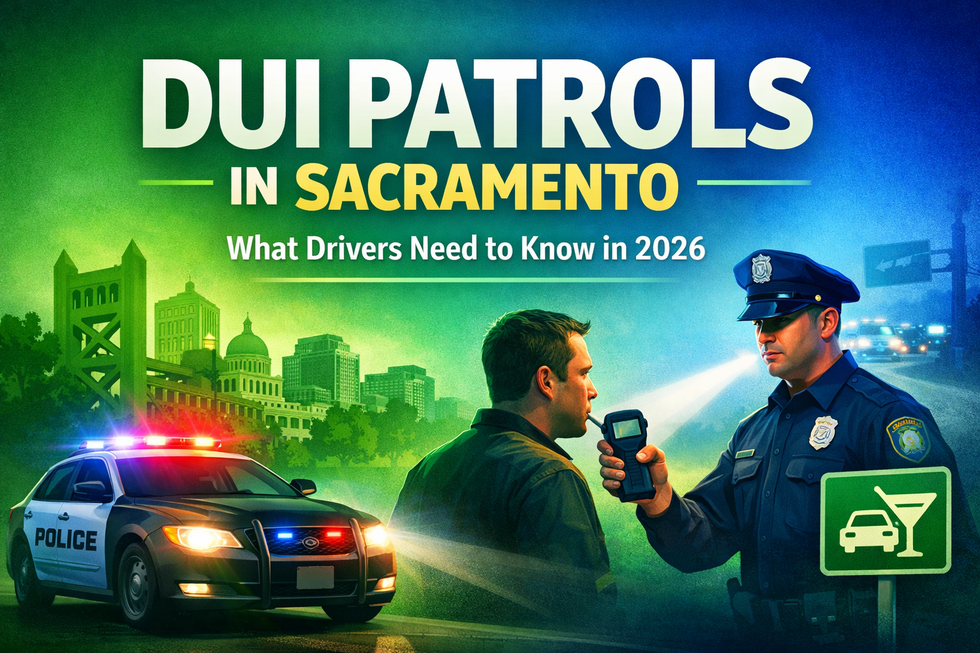
What Is a DUI Patrol?
A DUI patrol, often called a DUI saturation patrol, is when police officers are assigned to a specific area to actively look for drivers who may be under the influence of alcohol or drugs.
Instead of stopping every vehicle like a checkpoint, officers watch traffic and stop drivers only when they observe signs of impairment.
These patrols are commonly used by the Sacramento Police Department and the California Highway Patrol.
Important:
A DUI patrol is completely legal and allowed under California Vehicle Code §23152, which makes it illegal to drive under the influence of alcohol or drugs.
Why Sacramento Uses DUI Patrols
Law enforcement agencies use DUI patrols to reduce serious crashes and fatalities caused by impaired driving.
In cities like Sacramento, patrols are usually scheduled during:
-
Weekend nights
-
Holiday weekends
-
Major events
-
Late-night bar closing hours
Officers focus on areas with higher DUI crash rates or heavy nightlife traffic.
Typical locations include:
-
Downtown entertainment districts
-
Busy highways and major intersections
-
Areas near bars, clubs, and festivals
The goal is simple: spot dangerous drivers before they cause an accident.
How DUI Patrols Actually Work
During a DUI patrol, multiple officers are assigned to a specific area. They drive marked or unmarked police vehicles and monitor traffic closely.
Here's what usually happens.
1. Officers Watch Traffic Behavior
Police are trained to recognize signs that a driver may be impaired.
Common red flags include:
-
Swerving between lanes
-
Driving much slower than normal traffic
-
Sudden braking
-
Running red lights or stop signs
-
Drifting onto the shoulder
-
Wide turns
If an officer sees any of these behaviors, they may initiate a traffic stop.
2. The Officer Makes a Traffic Stop
Once stopped, the officer will approach the vehicle and begin observing the driver.
They look for signs such as:
-
Smell of alcohol
-
Slurred speech
-
Red or watery eyes
-
Slow reactions
-
Confusion when answering questions
Even small details can raise suspicion.
3. Field Sobriety Tests May Be Requested
If the officer believes the driver might be impaired, they may ask the driver to perform Field Sobriety Tests (FSTs).
Common tests include:
-
Walk-and-turn test
-
One-leg stand
-
Horizontal gaze nystagmus (eye test)
These tests help officers determine if a driver is likely under the influence.
Important to know:
In California, these roadside tests are voluntary for most drivers.
4. Breath Testing
Officers may ask the driver to take a preliminary breath test (PBT) using a handheld device.
This device measures blood alcohol concentration (BAC).
Under California's Implied Consent Law, drivers who are arrested for DUI must take a chemical test (breath or blood). Refusing after arrest can lead to license suspension and additional penalties.
5. Arrest and Chemical Testing
If the officer believes there is enough evidence of impairment, the driver may be arrested for DUI.
After arrest, the driver must complete an official chemical test, usually at a station or hospital.
This test determines the final BAC level used in court.
DUI Patrols vs DUI Checkpoints
Many drivers confuse these two enforcement methods.
Here's the difference:
| DUI Patrols | DUI Checkpoints |
|---|---|
|
Officers watch traffic for suspicious behavior |
Police stop vehicles in a predetermined pattern |
|
Stops happen only when officers see violations |
Every few vehicles are stopped |
|
No advance public notice required |
Must be publicly announced in advance |
Both methods are commonly used throughout California.
DUI Patrol Times in Sacramento
Most DUI patrols in Sacramento run during high-risk hours.
Typical schedules include:
-
6 PM – 2 AM
-
8 PM – 3 AM
-
Late night weekend patrols
Patrols increase significantly during:
-
New Year's Eve
-
Independence Day
-
Memorial Day
-
Labor Day
-
St. Patrick's Day
These periods tend to have higher alcohol consumption.
DUI Penalties in Sacramento (2026)
California DUI penalties remain strict in 2026.
A first DUI offense can include:
-
Fines up to $2,000 or more
-
License suspension
-
DUI education program
-
Probation
-
Possible jail time
More severe penalties apply for:
-
High BAC levels
-
Accidents or injuries
-
Repeat DUI offenses
Courts treat DUI cases very seriously.
Your Rights During a DUI Stop
If you are stopped during a DUI patrol in Sacramento, remember these important rights.
You have the right to:
-
Remain polite and calm
-
Provide your license, registration, and insurance
-
Decline field sobriety tests (in many cases)
-
Ask if you are free to leave
However, once arrested for DUI, you must submit to a chemical test under California law.
How to Avoid DUI Problems
The best way to avoid a DUI arrest is simple.
Never drive after drinking or using drugs.
Safer alternatives include:
-
Using rideshare services
-
Calling a taxi
-
Choosing a designated driver
-
Staying overnight
These choices can save lives and prevent serious legal trouble.
FAQs
1. Can passengers get in trouble during a DUI patrol stop?
Passengers usually do not get arrested just because the driver is stopped for DUI. However, if a passenger is doing something illegal, such as having open alcohol containers or drugs, officers may take action.
2. Do DUI patrol officers use unmarked police cars?
Yes. Many DUI patrol operations include both marked and unmarked vehicles.
Unmarked units help officers observe drivers without immediately being recognized as police.
These operations are often coordinated by the Sacramento Police Department and California Highway Patrol.
3. Can I legally turn away to avoid a DUI patrol area?
Yes, if you make a legal turn. Drivers are allowed to avoid areas where police activity is visible.
However, illegal turns, sudden U-turns, or traffic violations can give officers a reason to stop the vehicle.
4. Do DUI patrols only look for alcohol impairment?
No. Officers also look for drivers under the influence of:
-
Prescription medications
-
Marijuana
-
Illegal drugs
-
Combination of alcohol and drugs
Under California Vehicle Code §23152, driving under the influence of any substance that impairs driving ability can lead to a DUI charge.
5. Can police search my car during a DUI patrol stop?
Police generally cannot search your vehicle without consent, probable cause, or a warrant.
However, if officers see evidence such as open alcohol containers or drugs in plain view, they may legally search the vehicle.
6. How long does a DUI patrol traffic stop usually last?
Most DUI patrol stops last 5 to 15 minutes if the officer determines the driver is not impaired.
If tests are conducted, the stop may last longer depending on the situation.
7. Can I record a DUI patrol stop with my phone?
Yes. In California, drivers and passengers are generally allowed to record police interactions in public, as long as it does not interfere with the officer's duties.
Recording can sometimes provide useful documentation.
8. Do DUI patrol officers use drug detection experts?
Yes. Some patrols include Drug Recognition Experts (DREs) who are specially trained to detect impairment caused by drugs rather than alcohol.
These officers evaluate behavior, eye movement, pulse rate, and other physical indicators.
9. Are DUI patrols funded by special grants?
Many DUI patrol operations are funded through traffic safety grants provided by the California Office of Traffic Safety.
These grants help local police departments increase enforcement aimed at reducing drunk driving crashes.
10. Can weather affect DUI patrol operations?
Yes. Severe weather conditions like heavy rain or fog can sometimes delay or reduce patrol activity because safety risks increase for both officers and drivers.
However, patrols still often occur during normal weather conditions.
11. Do DUI patrols target specific types of drivers?
No. DUI patrols are designed to watch for driving behavior, not specific individuals or groups.
Officers focus on unsafe driving patterns, not the type of vehicle or the driver's background.
12. Are DUI patrols more common near bars and clubs?
Yes. Areas with high nightlife activity are often monitored closely because alcohol-related incidents tend to occur more frequently in those locations.
This is why patrols often operate in entertainment districts of Sacramento.
13. Can a DUI patrol stop lead to other charges?
Yes. During a stop, officers may discover other violations such as:
-
Driving with a suspended license
-
Possession of illegal substances
-
Outstanding arrest warrants
-
Unregistered vehicles
In those situations, additional charges may be filed.
14. Do DUI patrols use license plate scanners?
Some police vehicles use automatic license plate readers (ALPRs). These devices scan license plates and instantly check databases for:
-
Stolen vehicles
-
Suspended registrations
-
Wanted suspects
This technology helps officers identify potential violations quickly.
15. How can drivers stay informed about DUI patrol activity?
Drivers often look for updates from:
-
Local police announcements
-
News reports
-
Online DUI checkpoint tracking platforms
Many drivers also search online for DUI checkpoints or patrol updates in Sacramento before traveling late at night.
Final Thoughts
DUI patrols in Sacramento are designed to identify impaired drivers quickly and prevent dangerous crashes. Officers are trained to recognize subtle driving patterns that suggest impairment, and they patrol areas where DUI incidents are more likely to occur.
For drivers, understanding how these patrols operate can help reduce stress if you encounter one and ensure you know your legal rights.
Most importantly, responsible driving keeps everyone on the road safer.

Comments
There are no comments for this post. Be the first and Add your Comment below.
Leave a Comment