
New Year's Eve is one of the busiest nights of the year for DUI checkpoints. Police departments across the country increase enforcement because of higher traffic, late-night travel, and alcohol consumption tied to celebrations.
If you encounter a DUI checkpoint, knowing what to expect — and how to handle it — can help reduce stress and protect your rights. This guide walks you through the entire process step by step, meaning before you reach the checkpoint, during the stop, and after you're allowed to leave.
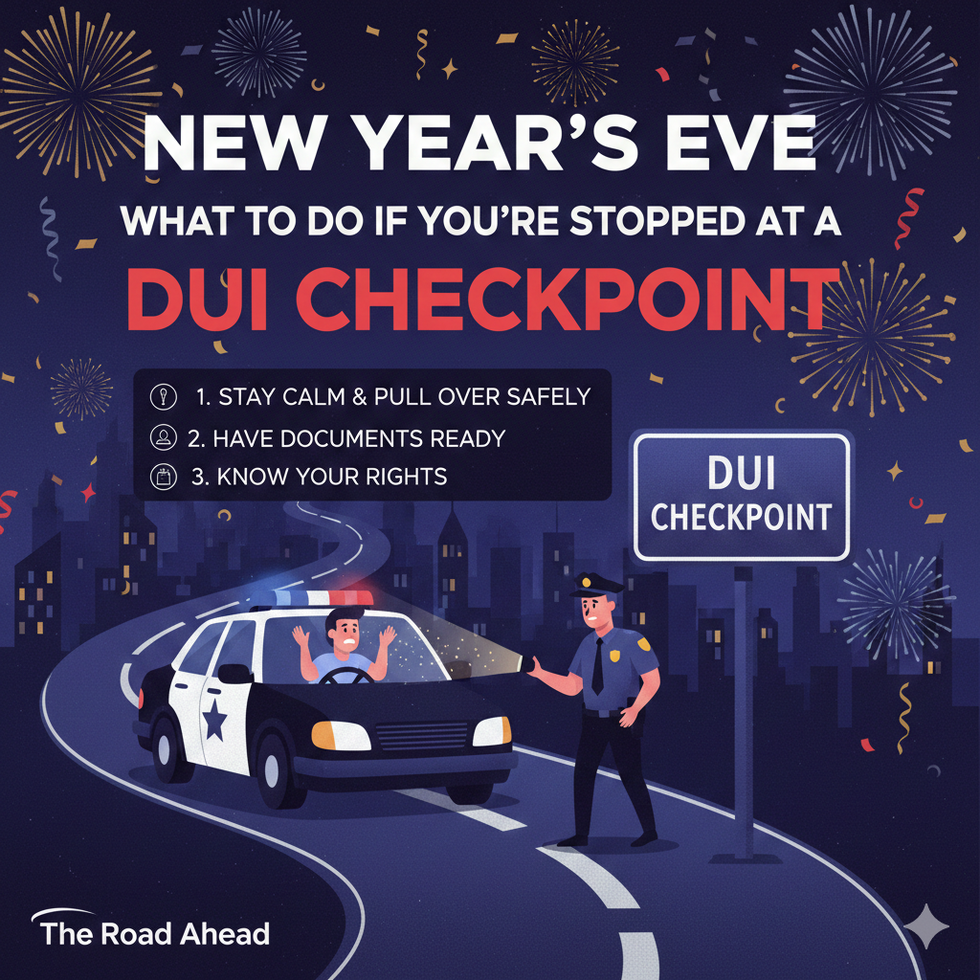
Why DUI Checkpoints Are Common on New Year's Eve
Law enforcement agencies consider New Year's Eve a high-risk night for impaired driving because:
-
Many people attend parties or celebrations involving alcohol
-
Roads are busier than usual late at night
-
DUI-related crashes historically increase during holidays
-
Officers aim to deter drunk driving before accidents happen
Checkpoints are usually announced in advance, but exact locations are often not disclosed.
Step 1: Stay Calm When You See the Checkpoint Ahead
As you approach a DUI checkpoint:
-
Slow down immediately
-
Follow posted signs and officer instructions
-
Do not make sudden turns or U-turns unless clearly legal and safe
Trying to avoid a checkpoint in an unsafe or suspicious way can draw police attention and lead to a stop.
Remaining calm and cooperative sets the tone for the entire interaction.
Step 2: Turn Off Distractions and Prepare
Before reaching the officer:
-
Turn off loud music
-
Roll down your window
-
Remove sunglasses or hats
-
Place your hands visibly on the steering wheel
This helps officers quickly assess that there is no immediate safety issue.
Step 3: Know What Documents to Have Ready
In most states, you are required to provide:
-
Driver's license
-
Vehicle registration
-
Proof of insurance
Keep these documents in an easy-to-reach place. When reaching for them:
-
Move slowly
-
Tell the officer what you're doing (“My license is in my wallet”)
This avoids misunderstandings and keeps the interaction smooth.
Step 4: Answer Basic Questions — Carefully and Politely
Officers may ask simple questions such as:
-
“Have you had anything to drink tonight?”
-
“Where are you coming from?”
-
“Where are you headed?”
Important to Know:
You generally must identify yourself and provide documents, but you are not required to answer investigative questions.
A polite response such as:
-
“I prefer not to answer any questions.”
is usually acceptable. Never argue or become confrontational.
Step 5: Understand Your Rights at the Checkpoint
At a DUI checkpoint, you still have rights.
You Have the Right To:
-
Remain silent beyond required identification
-
Decline consent to search your vehicle
-
Ask if you are being detained or are free to go
You Do NOT Have the Right To:
-
Refuse to show required documents
-
Ignore lawful instructions
-
Act aggressively or disrespectfully
Knowing the difference is key.
Step 6: Field Sobriety Tests — What You Should Know
Officers may ask you to perform field sobriety tests, such as:
-
Walking in a straight line
-
Standing on one leg
-
Following a light with your eyes
In many states:
-
These tests are voluntary
-
You may politely decline
If you choose to decline, do so respectfully:
-
“I respectfully decline to perform field sobriety tests.”
Refusal alone does not mean guilt, but laws vary by state.
Step 7: Preliminary Breath Tests (PBT)
You may be asked to take a handheld breath test at the checkpoint.
-
In many states, this test is optional
-
Refusing a roadside breath test may not carry penalties
-
Refusing a post-arrest chemical test often does carry penalties
Ask clearly:
-
“Is this test required or voluntary?”
Never guess — clarity matters.
Step 8: Stay Respectful No Matter What
Your behavior matters just as much as your words.
Always:
-
Speak calmly
-
Follow instructions
-
Avoid sarcasm or hostility
Never:
-
Joke about drinking
-
Argue roadside
-
Admit guilt or speculate
Even if you believe the stop is unfair, the roadside is not the place to fight it.
Step 9: How Long a DUI Checkpoint Stop Usually Lasts
Most checkpoint stops are brief:
-
30 seconds to 2 minutes if no issues are detected
-
Longer only if officers observe signs of impairment
If everything checks out, you'll be waved through quickly.
Step 10: If You Are Asked to Pull Over
If an officer asks you to pull aside:
-
This does not automatically mean arrest
-
They may want further observation or clarification
Remain calm and continue following instructions. Anything beyond basic checks must meet legal standards.
Step 11: If You Are Arrested
If you are placed under arrest:
-
Do not resist
-
Ask for an attorney
-
Do not discuss the situation further
Anything you say after arrest can be used against you later.
Step 12: After You Leave the Checkpoint
Once cleared:
-
Drive carefully
-
Avoid speeding or distracted driving
-
Stay alert — there may be multiple checkpoints
Remember that enforcement continues throughout the night.
Tips to Avoid Stress on New Year's Eve
The safest plan is always:
-
Use a rideshare or designated driver
-
Leave celebrations early
-
Stay overnight if drinking
No celebration is worth a DUI charge.
Final Thoughts
DUI checkpoints on New Year's Eve are designed to promote safety, not to trap responsible drivers. Knowing what to do, what to say, and what not to say can help you pass through quickly and confidently.
Stay calm, stay respectful, and stay informed — and you'll greatly reduce the chances of problems during a checkpoint stop.
FAQs
1. Are DUI checkpoints legal on New Year's Eve?
Yes, DUI checkpoints are legal in many states, especially during holidays like New Year's Eve. However, some states do not allow them or have strict rules about how they must be conducted.
2. Do police have to announce DUI checkpoints in advance?
In many states, law enforcement must announce checkpoints ahead of time, but they usually do not disclose the exact location. Announcements are meant to show transparency and deter impaired driving.
3. Can I legally turn around to avoid a DUI checkpoint?
You may legally avoid a checkpoint if you do so safely and follow traffic laws. Making an illegal U-turn, sudden turn, or unsafe maneuver can give police a reason to stop you.
4. What documents do I need to show at a DUI checkpoint?
You are typically required to show:
-
A valid driver's license
-
Vehicle registration
-
Proof of insurance
Having these ready helps speed up the stop.
5. Do I have to answer questions at a DUI checkpoint?
You must provide identification and required documents, but you generally do not have to answer questions about drinking or where you've been. You may politely decline to answer.
6. Can I refuse a field sobriety test at a checkpoint?
In many states, field sobriety tests are voluntary. You may politely decline, but laws vary. Refusing does not automatically mean you will be arrested.
7. Do I have to take a breathalyzer test at the checkpoint?
A handheld roadside breath test is often voluntary. However, refusing a chemical test after an arrest can carry serious penalties, including license suspension.
8. How long does a DUI checkpoint stop usually take?
If there are no issues, most stops last between 30 seconds and two minutes. Officers are trained to move traffic quickly.
9. What gives police probable cause at a checkpoint?
Officers may look for signs such as:
-
Smell of alcohol
-
Slurred speech
-
Bloodshot eyes
-
Open containers
-
Erratic behavior
These signs may lead to further investigation.
10. Can police search my car at a DUI checkpoint?
Police generally need your consent or probable cause to search your vehicle. You have the right to politely refuse a search request.
11. What should I do if I'm asked to pull over for further screening?
Remain calm and follow instructions. Being pulled aside does not automatically mean arrest. Officers may simply need additional observation.
12. Can passengers be questioned at a DUI checkpoint?
Officers usually focus on the driver. Passengers are not typically required to provide identification unless there is a specific legal reason.
13. Is it okay to drink earlier in the day and still drive?
Alcohol can stay in your system longer than expected. Even if you drank earlier, you may still be impaired. If you've been drinking at all, it's safest not to drive.
14. What happens if I refuse everything at a checkpoint?
Refusing required actions, such as showing ID, can lead to detention or arrest. Refusing optional tests may be allowed, but consequences depend on state law.
15. Can DUI checkpoints happen after midnight on New Year's Eve?
Yes. Many checkpoints begin late on December 31 and continue into the early hours of January 1, when impaired driving risk is highest.
16. Are DUI checkpoints only for alcohol?
No. Officers also watch for drug impairment, including prescription drugs, marijuana, and illegal substances.
17. Can I record a DUI checkpoint stop?
In many states, you may legally record police interactions as long as you do not interfere. Always comply if instructed otherwise.
18. What should I never say at a DUI checkpoint?
Avoid:
-
Admitting to drinking
-
Guessing how much you drank
-
Arguing or joking about alcohol
-
Making statements you're unsure about
Keep communication brief and respectful.
19. What is the safest way to avoid a DUI on New Year's Eve?
The safest options include:
-
Using a rideshare
-
Having a designated driver
-
Staying overnight
-
Avoiding alcohol entirely if driving
20. Can I be arrested even if I pass the checkpoint screening?
Yes, if officers later observe signs of impairment or traffic violations, they may still initiate a stop.
21. How can I find DUI checkpoints online before heading out?
One of the easiest ways to find DUI checkpoints online is by using DUICheckpointsFinder.com. The site tracks and publishes DUI checkpoint information across the U.S., including holiday checkpoints like New Year's Eve. It provides location updates, dates, times, and affected areas whenever information becomes available. Checking DUICheckpointsFinder.com before you travel can help you stay informed, plan safer routes, and avoid unexpected delays on the road.

Comments
There are no comments for this post. Be the first and Add your Comment below.
Leave a Comment