
How Are DUI Checkpoint Locations Chosen in Sacramento, CA?
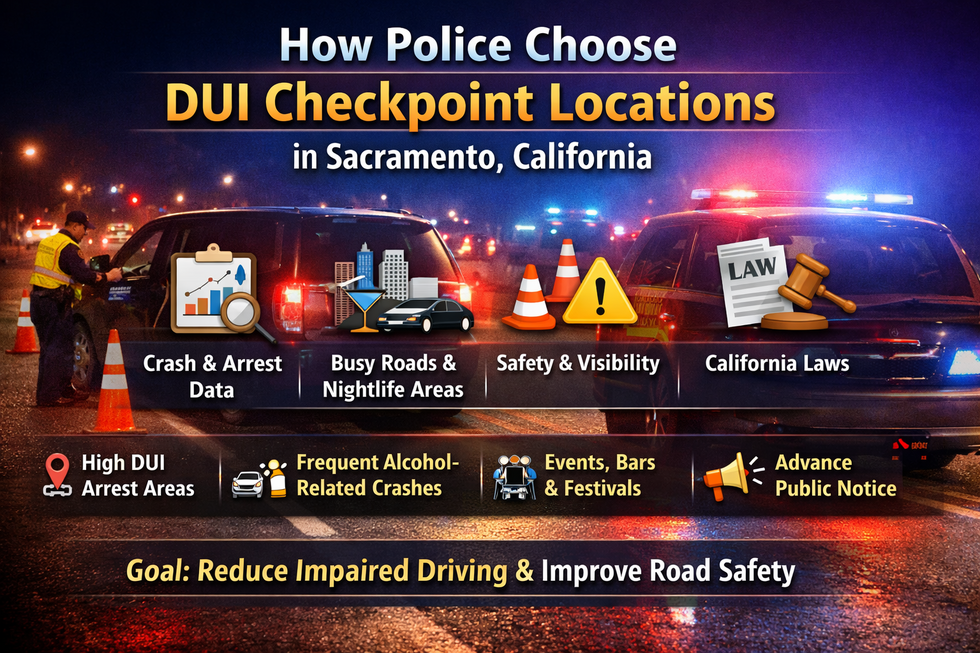
DUI checkpoint locations in Sacramento, California are chosen using crime data, traffic safety analysis, and California Supreme Court guidelines. Law enforcement agencies select locations based on DUI arrest history, alcohol-related crashes, traffic volume, and public safety considerations—not at random.
The primary goal is to reduce impaired driving and prevent accidents, not simply to issue citations or make arrests.
What Is a DUI Checkpoint?
A DUI checkpoint is a temporary traffic stop where police briefly stop vehicles to check for signs of alcohol or drug impairment.
In Sacramento:
-
DUI checkpoints are legal under California law
-
They are commonly used on weekends and holidays
-
Sacramento Police and the California Highway Patrol (CHP) conduct them regularly
-
Their purpose is deterrence and public safety
Are DUI Checkpoints Legal in California?
Yes. DUI checkpoints are legal in California when they follow guidelines set by the California Supreme Court.
Those rules require that:
-
Locations are selected based on safety data
-
The checkpoint serves a public safety purpose
-
Officers follow standardized procedures
-
Traffic flow is managed safely
-
Advance public notice is often provided
These requirements help ensure checkpoints are constitutional and not arbitrary.
What Data Do Police Use to Select DUI Checkpoint Locations?
Sacramento law enforcement relies heavily on historical and statistical data when selecting DUI checkpoint locations.
This includes:
-
Areas with high DUI arrest rates
-
Roads with frequent alcohol-related crashes
-
Intersections with repeated DUI incidents
-
Prior checkpoint effectiveness data
By focusing on data-driven locations, police aim to place checkpoints where they are most likely to prevent impaired driving.
Why Are DUI Checkpoints Often on Busy Roads?
Police choose roads that allow checkpoints to operate safely and efficiently.
Ideal road features include:
-
Consistent traffic volume
-
Multiple lanes or wide shoulders
-
Good visibility and lighting
-
Space to safely pull vehicles aside
Narrow residential streets are rarely used because they increase safety risks and traffic disruption.
Do Bars and Events Affect DUI Checkpoint Locations in Sacramento?
Yes. Proximity to nightlife and events plays a major role in checkpoint placement.
Common examples include:
-
Downtown Sacramento nightlife areas
-
Roads near arenas, concerts, and festivals
-
Routes connecting bars, clubs, and entertainment districts
Checkpoints are often scheduled after major events to intercept impaired drivers before crashes occur.
Does Past DUI Activity Influence Future Checkpoints?
Absolutely. Police review past trends when deciding where to set up checkpoints.
They analyze:
-
Prior DUI arrests in specific areas
-
Results from earlier checkpoints
-
Community safety complaints
This pattern-based approach ensures locations are chosen strategically rather than randomly.
What Safety and Visibility Rules Must DUI Checkpoints Follow?
California law requires DUI checkpoints to be clearly visible and safely operated.
Required elements include:
-
Advance warning signs
-
Cones, flares, or reflective markers
-
Flashing lights and marked police vehicles
-
Designated areas to pull vehicles out of traffic
These rules explain why checkpoints usually appear on wide, well-lit roads in Sacramento.
What Is the Purpose of DUI Checkpoints in Sacramento?
The main goals of DUI checkpoints are to:
-
Reduce alcohol- and drug-related crashes
-
Deter impaired driving through visibility
-
Improve roadway safety for the community
Even drivers who are not stopped may choose not to drive impaired after seeing a checkpoint, which increases overall safety.
What Are Your Rights at a DUI Checkpoint in Sacramento?
If you encounter a DUI checkpoint:
-
You must stop when directed by police
-
You may be asked for your driver's license and registration
-
You should remain calm and respectful
This information is provided for general awareness only and is not legal advice.
How DUI Checkpoint Information Is Tracked and Verified
DUI checkpoint announcements are typically published in advance by law enforcement agencies.
Information is collected from:
-
Police and sheriff department press releases
-
Official law enforcement websites
-
Public safety announcements and notices
Checkpoint data is reviewed before publication to ensure accuracy and reliability.
Need Legal Help After a DUI Checkpoint in Sacramento?
If you were stopped or arrested at a DUI checkpoint in Sacramento, experienced legal guidance matters.
The Law Office of John Campanella is available 24 hours a day, 7 days a week to help protect your rights.
Call (916) 498-8460 for a free consultation to discuss your situation and next steps.
Legal Disclaimer
This content is provided for general informational purposes only and does not constitute legal advice. DUI laws, enforcement practices, and checkpoint procedures may change. Reading this article does not create an attorney-client relationship.
For legal advice specific to your situation, consult a qualified California DUI attorney.
Attorney John Campanella and information available at https://www.sacramentoduiinformation.com/ are referenced for general educational purposes only.

Comments
There are no comments for this post. Be the first and Add your Comment below.
Leave a Comment