
Law Office of John Campanella
If your license has been suspended and you received the DMV notice after the effective date, do not assume that you have no options. The notice, mailing history, driving record, and reason for missing the hearing deadline all deserve careful review.
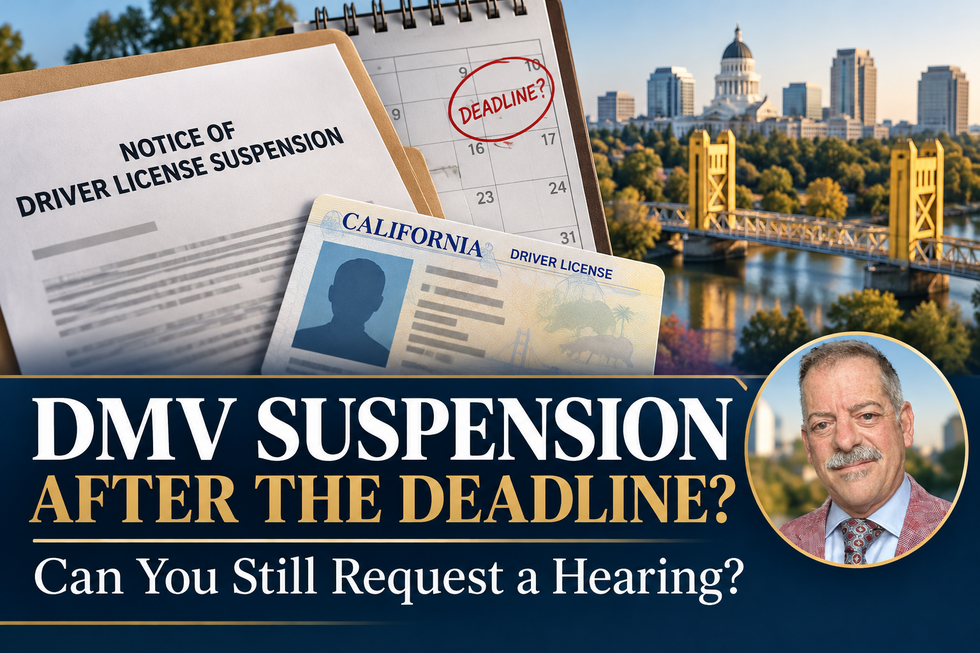
If you have just discovered that the California Department of Motor Vehicles (DMV) suspended your driver's license, your first concern is probably practical: Can I get my license back, and what should I do now?
That concern becomes more urgent when the suspension notice arrives after its effective date or you discover the suspension without ever receiving the original letter. You may depend on your license to get to work, care for your family, or meet other daily responsibilities. Learning that a deadline has passed can make the situation feel hopeless.
I am John Campanella, and my practice focuses on DUI and related California driving-privilege matters. When a driver contacts my office about a DMV suspension, the important first step is to identify exactly what action the DMV took and which procedure applies. A negligent-operator suspension is not the same as a DUI administrative suspension, and the available options can differ substantially.
If your case involves California's Negligent Operator Treatment System (NOTS), a missed hearing deadline does not necessarily end the inquiry. California regulations permit the DMV to consider certain late hearing requests when the required conditions are established. The DMV also recognizes nonreceipt of an initial NOTS order as a possible basis for setting aside an action when the evidence supports it.
As a Sacramento DMV negligent operator suspension lawyer, I would want to understand when the notice was mailed, when you actually received it, when you learned of the suspension, and why you could not request a hearing on time. Those details can be important in evaluating the next step.
Late notice
Establish when the order was mailed, delivered, and first discovered.
Late hearing
Evaluate whether the facts meet California's requirements for a late request.
License status
Confirm whether your driving privilege remains suspended before driving.
How California's Negligent Operator Treatment System Works
California's Negligent Operator Treatment System is intended to identify drivers whose records show a pattern of traffic violations or responsible collisions. The DMV assigns negligent-operator points to qualifying convictions and collisions and evaluates those points over specified periods.
For a typical adult Class C driver, the statutory negligent-operator thresholds generally include four or more points within 12 months, six or more within 24 months, or eight or more within 36 months. Different rules may apply to qualifying commercial drivers, and the type of violation and the accuracy of the record can matter.
The DMV uses a series of actions that can progress from warnings to a notice of intent to suspend and then an order of probation and suspension. A further action may follow if a driver violates NOTS probation.
| NOTS level | General action | What it means |
|---|---|---|
|
Level I |
Warning letter |
The DMV warns that the driving record is approaching a higher intervention level. |
|
Level II |
Notice of intent to suspend |
The driver is notified of potential suspension action. |
|
Level III |
Order of probation and suspension |
The DMV may impose probation and a suspension under the applicable rules. |
|
Level IV |
Violation of NOTS probation |
Certain violations, collisions, or failures to appear during probation may trigger further action. |
According to the California DMV, a standard Level III order generally includes one year of probation and a six-month suspension. The action ordinarily becomes effective 34 days after the order is mailed. The actual notice should be reviewed to confirm the effective date and the action imposed in your case.
The important distinction is that a NOTS action concerns the DMV's assessment of your driving record. It is not necessarily a criminal court judgment, and challenging a traffic citation in court is a separate process from requesting a DMV hearing.
You can review the DMV's official explanation of California negligent-operator actions.
What If Your Suspension Notice Arrives After the Effective Date?
The first thing I would want to clarify is whether the notice arrived late or whether the original order was never received. Those are different factual situations, and the distinction may affect which option is appropriate.
Situation 1: You received the letter after the suspension took effect
If you received the letter after the effective date, preserve the envelope and any available delivery information. The postmark, tracking details, address on the envelope, and the date you actually received it may help establish the timeline.
Late delivery alone does not automatically cancel the suspension. The relevant questions include what the DMV mailed, when it was mailed, whether the applicable notice procedure was followed, and why you were unable to request a hearing within the required period.
Situation 2: You never received the original NOTS order
If you never received the initial order and learned about the suspension through another source, that fact may be important. The DMV's published NOTS hearing guidance lists an action set aside for nonreceipt of the initial NOTS order as one possible decision.
That does not mean every claim of nonreceipt will succeed. The explanation should be consistent with the available mailing, address, and DMV records. If you moved, for example, the date you moved and any address-update records may be relevant to understanding what happened.
Situation 3: You received the notice but did not understand the deadline
This situation can be more difficult. Not understanding a letter or overlooking a deadline does not automatically establish a basis for a late hearing. The applicable regulation focuses on whether the driver or representative was responsible for the delay and whether a timely request could reasonably have been made.
Do not assume the suspension is invalid simply because the notice arrived late. Preserve the evidence, verify your current driving status, and determine whether the facts support a late hearing request or a nonreceipt argument.
Can You Request a Late DMV Administrative Hearing?
Potentially, yes. California Code of Regulations, title 13, §115.04(b) allows the DMV to grant a late hearing request in qualifying circumstances. If a driver misses the 10-day deadline described in Vehicle Code §14100, the DMV may still grant a hearing when the driver provides information establishing both of the following:
- The driver or the driver's representative was not responsible for the delay in requesting the hearing.
- The driver or representative could not reasonably have made a timely request.
These are separate requirements. A request should explain why the deadline was missed, when the driver learned about the action, what prevented a timely response, and what steps were taken once the problem was discovered.
For example, if you can document that the original order was not received and that you acted promptly after learning about the suspension, those facts may be relevant. Whether they satisfy the regulation depends on the complete circumstances and the evidence submitted.
I would not advise treating a late hearing as a formality. The regulation says the DMV may grant the request; it does not guarantee that every late request will be accepted. The request must address the applicable legal requirements and be supported by credible information.
You can read the text of California Code of Regulations, title 13, §115.04. You can also review the DMV's official NOTS hearing guidance.
What Records May Support a Late Hearing or Review Request?
The documents that matter most depend on why you missed the deadline. When I evaluate a DMV-related issue, the starting point is to establish a clear chronology and compare the driver's account with the available records.
1. The original notice and envelope
- The complete NOTS order or suspension notice.
- The envelope showing the address and postmark, if available.
- Any tracking or delivery records.
- The stated mailing date and effective date.
2. Address and mail-forwarding records
- Documents showing when you moved, if relevant.
- Address-change confirmations or mail-forwarding records.
- Correspondence showing which address the DMV used, where available.
- Any earlier communication about missing or misdirected mail.
3. Your DMV driving record and related court records
- A current copy of your driving record.
- Relevant traffic-court dispositions.
- Documents that may show an incorrect conviction, date, point value, or collision entry.
- Earlier DMV notices or orders related to the same action.
4. A written timeline of events
- When you believe the order was mailed.
- When the notice arrived, if it arrived at all.
- When and how you first learned of the suspension.
- What you did immediately after discovering the problem.
A written timeline can help explain the sequence of events, but it should be accurate and consistent with the documents. Do not alter an envelope, backdate a statement, or exaggerate why the deadline was missed. Unsupported claims can undermine an otherwise legitimate request.
Can the DMV Set Aside a NOTS Action for Nonreceipt?
The DMV's NOTS hearing guidance identifies several possible outcomes, including sustaining an action, modifying an action, and setting an action aside when the evidence does not support it. It also identifies a separate outcome for nonreceipt of the initial NOTS order.
That distinction matters. A driver who never received the original order may have a different argument from someone who received it but forgot to respond. If the issue is nonreceipt, the request should focus on the facts that support the claim and explain when the driver first became aware of the action.
Nonreceipt does not automatically erase the underlying driving record or guarantee reinstatement. The DMV must evaluate the circumstances and the applicable procedure. If a hearing is granted, the driver may still need to address whether the negligent-operator action itself is supported by the record.
What If the DMV's Point Calculation Is Wrong?
The late notice may not be the only issue worth examining. A NOTS hearing can also consider whether the driving record is correct, whether the record establishes a pattern of negligent driving, and whether relevant circumstances or evidence affect the proposed action.
When reviewing the record, I would want to identify specific issues rather than make a general claim that the suspension is unfair. Depending on the case, questions may include:
- Does the DMV record identify the correct driver?
- Are the listed convictions and dispositions accurate?
- Do the dates and point values match the available records?
- Does a collision entry require further review of responsibility?
- Is the action based on information that is incomplete or inconsistent?
A NOTS hearing is an administrative proceeding, not a substitute for every possible court challenge. If an underlying citation is still subject to a separate legal remedy, that issue should be evaluated under the rules governing that citation.
What Should You Do Immediately After Discovering Your License Is Suspended?
If you have already missed the deadline, I would not recommend waiting to see whether the problem resolves itself. Start by confirming your status and preserving the documents that may explain what happened.
- Confirm your current license status. Contact the DMV or use its official services to identify the suspension, effective date, and any current restrictions.
- Obtain the relevant documents. Gather the notice, driving record, earlier correspondence, and any available mailing or delivery records.
- Preserve the envelope. Do not discard the envelope if it may help establish when the notice was sent or delivered.
- Write down the timeline. Record when you moved, received mail, learned of the action, and attempted to resolve the issue, as applicable.
- Determine which procedure applies. A late hearing request, a nonreceipt argument, and a challenge to an incorrect driving record are not interchangeable.
- Seek advice promptly. A lawyer can review the documents and help identify which options are legally available on your facts.
Do not drive just because you have submitted a request. Filing a late hearing request does not automatically restore your license or guarantee a stay. Confirm that your driving privilege has been lawfully restored before operating a vehicle.
Does a Late Hearing Request Automatically Stop the Suspension?
No. A request for a late hearing, acceptance of that request, a stay, and a final decision are different procedural steps.
The DMV's published NOTS guidance states that when a hearing request is received within the allowed timeframe and a hearing cannot be held before the order's effective date, the DMV will grant a stay, subject to applicable exceptions. That does not mean every late request receives a stay.
If the suspension is already effective, ask the DMV what procedure is available and whether a stay or other order has actually been granted. Keep written confirmation where possible. Until you have verified your legal status, do not assume you are authorized to drive.
When Should You Contact a Sacramento DMV Suspension Attorney?
I recommend seeking legal advice promptly if your license is already suspended, the hearing deadline has passed, or you believe the original NOTS order was never received. The same is true if your driving record appears inaccurate or you are unsure which type of suspension the DMV imposed.
In a consultation, the important questions are not simply whether you need your license back. They include:
- What type of DMV action is involved?
- Which deadline and hearing procedure apply?
- What caused the delay, and can the explanation be documented?
- Is there evidence of nonreceipt of the initial NOTS order?
- Does the driving record contain errors that should be addressed?
- What must happen before you can legally drive again?
My approach is to examine the applicable DMV procedure, the record, and the evidence before deciding which argument to pursue. No attorney can guarantee that a late hearing request will be granted or that a suspension will be set aside. The objective is to identify a supportable legal path and explain the potential outcomes clearly.
If your matter involves a DUI-related suspension rather than NOTS, the procedure may be different. You can also read about the difference between court and DMV hearings in Sacramento and how a DUI can affect a California driver's license.
Frequently Asked Questions
Can I challenge a California negligent-operator suspension after the deadline?
Possibly. California Code of Regulations, title 13, §115.04 allows the DMV to grant a late hearing request when the driver or representative was not responsible for the delay and could not reasonably have made a timely request. The decision depends on the information provided and is not guaranteed.
What if my suspension letter arrived after the effective date?
Keep the envelope and delivery evidence, confirm the dates, obtain the DMV record, and promptly ask about the appropriate hearing or review procedure. Late delivery does not automatically cancel a suspension.
What if I never received the original NOTS order?
The DMV's published NOTS guidance identifies setting aside an action for nonreceipt of the initial order as a possible outcome when supported by evidence. Gather the available mailing, address, and correspondence records.
Will the DMV automatically restore my license if it grants a hearing?
Not necessarily. A hearing request and a final decision are different steps. Confirm whether any stay or reinstatement order has been issued and verify your current driving status before driving.
What records should I bring to an attorney?
Bring the suspension notice, envelope, driving record, court documents, address-change records, relevant DMV correspondence, and a timeline explaining when you learned about the suspension and why the deadline was missed.
Can I drive to work while I challenge the suspension?
Do not drive unless your current driving privilege and any applicable order authorize it. Filing a request does not automatically reinstate your license. Confirm your status with the DMV or qualified legal counsel.
Contact the Law Office of John Campanella
If your California driver's license has been suspended and you received the notice late, missed the hearing deadline, or never received the original NOTS order, I encourage you to address the issue promptly. I can review the circumstances with you, explain the relevant DMV procedures, and help you understand what options may be available based on your records.
Start by gathering your notice, envelope, driving record, and any correspondence about the suspension. These documents can help establish the timeline and identify the issues that need attention.
Need help with a DMV negligent operator suspension?
I invite you to contact me through the Law Office of John Campanella to discuss your situation and the next steps that may be available.
Official Legal Resources
- California DMV: Negligent Operator Actions
- California DMV: NOTS Hearings and Possible Decisions
- California Code of Regulations, Title 13, §115.04: Hearing Requests and Late Hearing Requests

Comments
There are no comments for this post. Be the first and Add your Comment below.
Leave a Comment