
If you've been stopped by a police officer on suspicion of driving under the influence (DUI), you may be asked to take a breath test. During the investigation, you might hear terms like PAS test, Breathalyzer, or chemical breath test. Many California drivers believe these are the same thing, but they are actually different tests used at different stages of a DUI investigation.
Understanding the difference between a Preliminary Alcohol Screening (PAS) test and a Breathalyzer test is important because each serves a different purpose and may have different legal consequences.
Whether you're trying to understand your rights or simply want to learn how California DUI investigations work, this guide explains everything you need to know in simple language.
What Is a PAS Test?
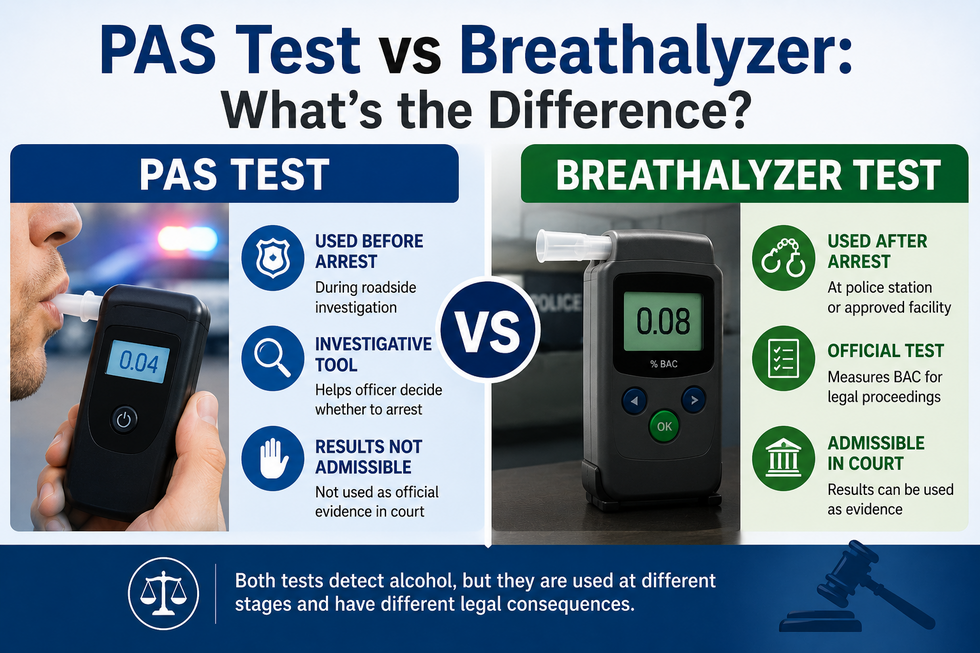
A PAS test, which stands for Preliminary Alcohol Screening test, is a portable breath-testing device used by police officers during a DUI investigation before a driver is arrested.
The device is small enough to be carried in a patrol vehicle and can quickly estimate the amount of alcohol in a driver's breath. The results help officers decide whether they have enough evidence to continue the DUI investigation or make an arrest.
A PAS test is commonly used after an officer notices signs that may suggest alcohol impairment, such as:
- The smell of alcohol
- Slurred speech
- Bloodshot or watery eyes
- Poor driving behavior
- An admission of drinking alcohol
The PAS test is considered part of the roadside investigation rather than the official chemical testing process.
What Is a Breathalyzer Test?
A Breathalyzer test is commonly used to describe the official breath test given after a person has been arrested for DUI.
Unlike the portable PAS device, this test is performed using a larger and more sophisticated machine designed to accurately measure a person's Blood Alcohol Concentration (BAC).
The results of this test may be used as evidence during DMV proceedings and in court.
Because this test is performed after an arrest, it carries greater legal significance than the roadside PAS test.
PAS Test vs Breathalyzer: Key Differences
Although both tests measure alcohol in a person's breath, they are not identical.
A PAS test is generally used before an arrest as part of the officer's investigation. It helps determine whether there is probable cause to make an arrest for DUI.
A Breathalyzer or evidential breath test is usually given after an arrest and is intended to provide a more accurate measurement of alcohol concentration for legal purposes.
The PAS device is portable and designed for roadside use, while the official Breathalyzer is located at a police station, jail, or approved testing facility.
Another important difference is that the legal rules surrounding each test may not be the same.
When Is a PAS Test Used?
Police officers may request a PAS test during a traffic stop when they believe a driver may have consumed alcohol.
For example, an officer may ask a driver to take a PAS test if:
- The driver was weaving between lanes.
- The officer smells alcohol inside the vehicle.
- The driver admits to having drinks earlier in the evening.
- The driver performs poorly on field sobriety tests.
The PAS test helps officers gather additional information before deciding whether to make an arrest.
It is one part of the overall DUI investigation and is often used together with the officer's observations and other evidence.
When Is an Evidential Breath Test Used?
An evidential breath test is generally administered after a driver has been lawfully arrested for DUI.
This test is designed to provide an official measurement of Blood Alcohol Concentration.
Depending on the circumstances, the driver may be asked to provide a breath sample using certified testing equipment or complete another approved chemical test.
The results are often used during criminal court proceedings and California DMV administrative actions.
Can You Refuse a PAS Test?
The answer depends on your situation.
For many adult drivers who are at least 21 years old and are not on DUI probation, the PAS test is generally considered part of the officer's roadside investigation before an arrest.
However, different rules may apply to:
- Drivers under the age of 21
- Drivers already on DUI probation
- Commercial drivers in certain situations
Because every case is different, drivers should understand that refusing a PAS test may still affect a DUI investigation.
Can You Refuse a Breathalyzer After Arrest?
Once a person has been lawfully arrested for DUI, California law generally requires the driver to complete an approved chemical test.
Refusing to complete the required chemical test after arrest can lead to serious consequences.
Possible consequences may include:
- Driver's license suspension
- Longer driver's license restrictions
- Additional penalties during DMV proceedings
- Evidence that may be considered during a DUI case
For these reasons, the rules after an arrest are different from those that apply during the initial roadside investigation.
California Implied Consent Law
California has an Implied Consent Law.
This law means that by accepting the privilege of driving on California roads, licensed drivers agree to submit to a chemical test if they are lawfully arrested for DUI.
The implied consent law applies after a lawful DUI arrest.
It does not mean every driver must automatically take every roadside test before an arrest.
Understanding when implied consent begins is an important part of understanding California DUI law.
How Accurate Are PAS Tests?
PAS devices are designed to provide quick estimates of Blood Alcohol Concentration.
Although they are useful investigative tools, several factors may influence the accuracy of a reading.
These factors may include:
- Recent alcohol consumption
- Mouth alcohol
- Certain medications
- Medical conditions
- Improper device maintenance
- Environmental conditions
- Operator error
For these reasons, the official evidential breath test is generally considered more reliable for legal proceedings.
Can Breath Test Results Be Challenged?
Yes.
Breath test results are not automatically accepted without question.
An experienced DUI attorney may review many aspects of the testing process to determine whether the results are reliable.
Potential issues may include:
- Improper calibration
- Equipment malfunction
- Maintenance records
- Operator training
- Incorrect testing procedures
- Medical conditions affecting the sample
Every DUI case is unique, and whether a breath test can be challenged depends on the specific facts.
What Happens If You Fail Either Test?
A breath test showing alcohol does not automatically mean a person will be convicted of DUI.
Police officers consider many different factors during a DUI investigation.
These may include:
- Driving behavior
- Physical appearance
- Statements made by the driver
- Field sobriety test performance
- Breath test results
- Other available evidence
Similarly, prosecutors and the court review the entire case rather than relying on only one piece of evidence.
Why Knowing the Difference Matters
Many California drivers believe every breath test is a Breathalyzer.
In reality, understanding the difference between a PAS test and an evidential breath test can help you better understand how a DUI investigation progresses.
Knowing when each test is used also helps drivers understand why different legal rules may apply before and after an arrest.
Being informed does not replace legal advice, but it can help you better understand the DUI process.
Frequently Asked Questions
Is a PAS test the same as a Breathalyzer?
No. A PAS test is generally a portable roadside screening device used before an arrest, while a Breathalyzer is commonly used to describe the official breath test administered after a lawful DUI arrest.
Which test is more accurate?
The official evidential breath test is generally considered more accurate because it uses certified equipment designed for legal testing.
Can mouthwash affect a PAS test?
In some situations, alcohol-based mouthwash or other substances may temporarily affect a breath sample if the test is administered shortly after use.
Can a PAS test be used in court?
Depending on the circumstances, PAS test results may become part of the evidence in a DUI case, although the court considers many different factors when evaluating the evidence.
Do police have to offer a blood test?
The available testing options depend on the circumstances of the arrest and California law. Not every situation is exactly the same.
What happens if you refuse a PAS test?
The answer depends on several factors, including your age, driving status, and whether you are currently on DUI probation. Different rules apply in different situations.
Will failing a PAS test automatically result in a DUI conviction?
No. A PAS test is only one part of a DUI investigation. Prosecutors typically consider all available evidence before pursuing a case.
Can medications affect a breath test?
Some medical conditions and certain medications may influence breath test results or the testing process, depending on the circumstances.
Final Thoughts
Although the terms PAS test and Breathalyzer are often used interchangeably, they serve different purposes during a California DUI investigation. A PAS test is generally used during the roadside investigation before an arrest, while an evidential Breathalyzer test is performed after a lawful arrest to obtain an official alcohol reading.
Understanding the difference between these tests can help you better understand how DUI investigations work and what to expect if you are stopped by law enforcement. If you have been arrested for DUI or have questions about breath testing procedures, speaking with an experienced Sacramento DUI attorney can help you understand your legal rights and options based on the facts of your case.

Comments
There are no comments for this post. Be the first and Add your Comment below.
Leave a Comment